

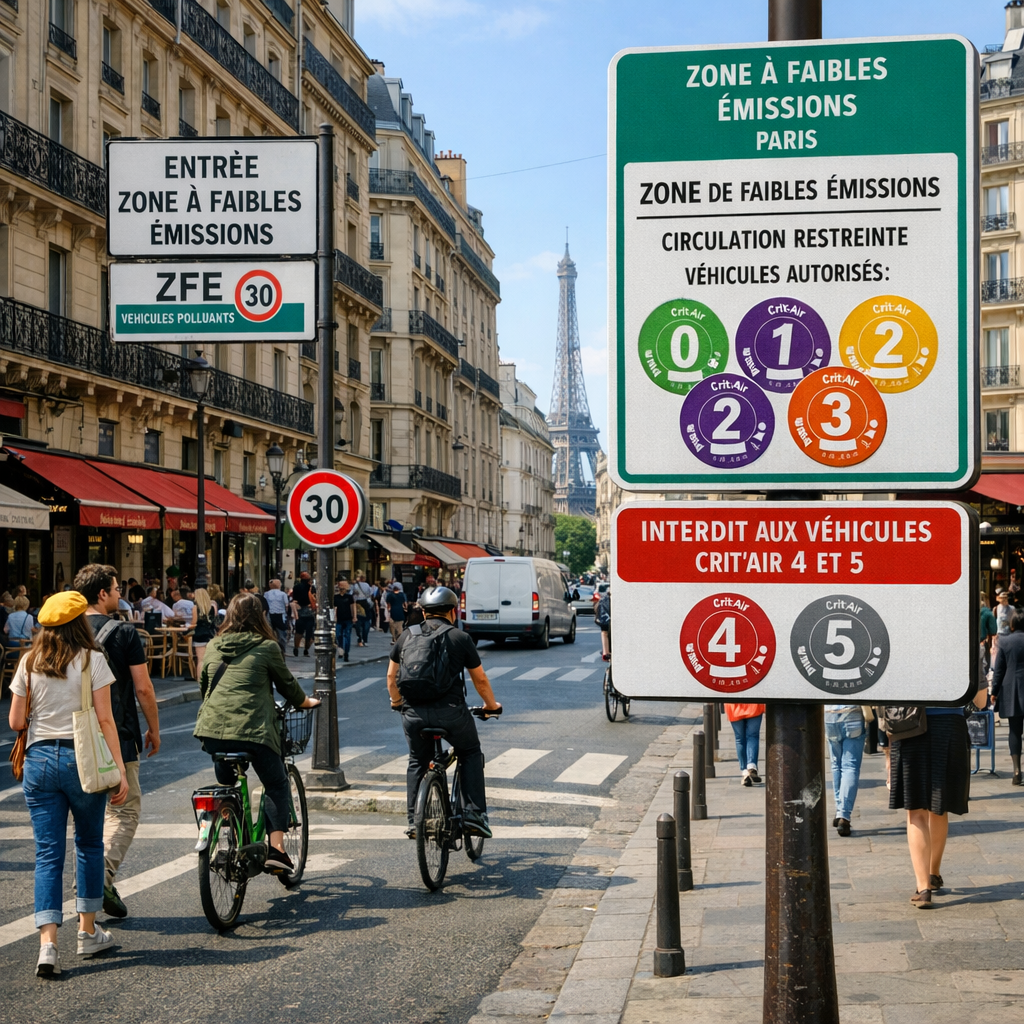
In a decisive move to address air quality concerns, the City of Paris has chosen to maintain its low-emission zones (LEZs), even as the French National Assembly voted to abolish such zones nationwide. This decision underscores Paris’s commitment to environmental health and sustainable urban living.
Paris’s Commitment to Air Quality
Paris’s LEZs, established to reduce vehicular emissions, have been instrumental in curbing air pollution within the city. By restricting access to vehicles based on their Crit’Air classification—a system that categorizes vehicles according to their emission levels—the city aims to promote cleaner transportation options and improve public health.
National Policy Shift
In April 2026, the French National Assembly voted to abolish low-emission zones across the country, citing concerns over economic impacts and mobility restrictions. This legislative change prompted various municipalities to reassess their environmental policies.
Paris’s Independent Stance
Despite the national directive, Paris has opted to retain its LEZs. The city’s administration emphasizes the importance of these zones in achieving long-term environmental goals and protecting residents from the adverse effects of air pollution. This decision aligns with Paris’s broader strategy to promote sustainable urban development and combat climate change.
Implications for Residents and Visitors
For Parisians and visitors alike, the continuation of LEZs means that vehicle access within certain areas will remain regulated. Motorists are encouraged to familiarize themselves with the Crit’Air classification system and ensure their vehicles comply with the city’s emission standards to avoid penalties.
Looking Ahead
Paris’s steadfast approach serves as a model for other cities grappling with balancing economic considerations and environmental responsibilities. As the city continues to prioritize air quality and public health, residents can expect ongoing initiatives aimed at fostering a cleaner, more sustainable urban environment.