

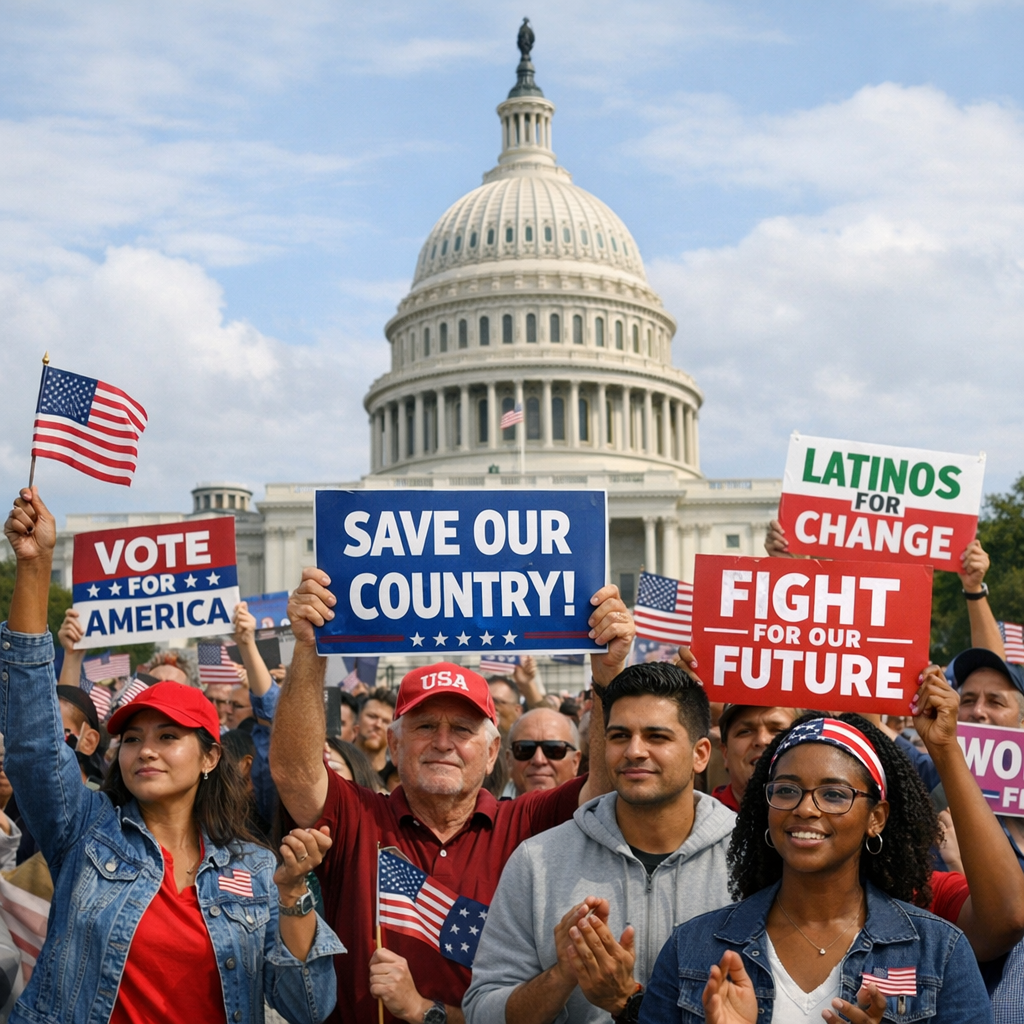
The United States is currently experiencing a dynamic political and economic landscape, marked by significant events and policy shifts.
Political Developments
As the 2026 midterm elections approach, the political climate is increasingly volatile. Redistricting battles are intensifying across the country, with proposals that could alter the balance of power in Congress. For instance, Florida’s Governor Ron DeSantis has introduced new congressional maps that may reduce Democratic representation, while Virginia’s recent Democratic-led remapping threatens several Republican incumbents. Additionally, an alleged assassination attempt on President Trump at the White House Correspondents’ Dinner in April 2026 has heightened partisan tensions, leading to debates over political rhetoric and violence.
Economic Landscape
On the economic front, the U.S. is facing challenges stemming from recent policy decisions. President Trump’s administration has implemented a series of tariffs aimed at various trading partners. However, the Supreme Court struck down the broadest measures earlier this year, leading to ongoing uncertainty in financial markets. Despite the passage of the “One Big Beautiful Bill” in 2025, which was intended to bolster domestic economic growth, public confidence remains fragile. Many Americans continue to cite the cost of living as a primary concern, reflecting the complex interplay between policy initiatives and economic realities.
Implications
These developments underscore the intricate relationship between political decisions and economic outcomes in the U.S. As the nation navigates these challenges, the upcoming midterm elections will be pivotal in shaping the future direction of both policy and economic strategy.