

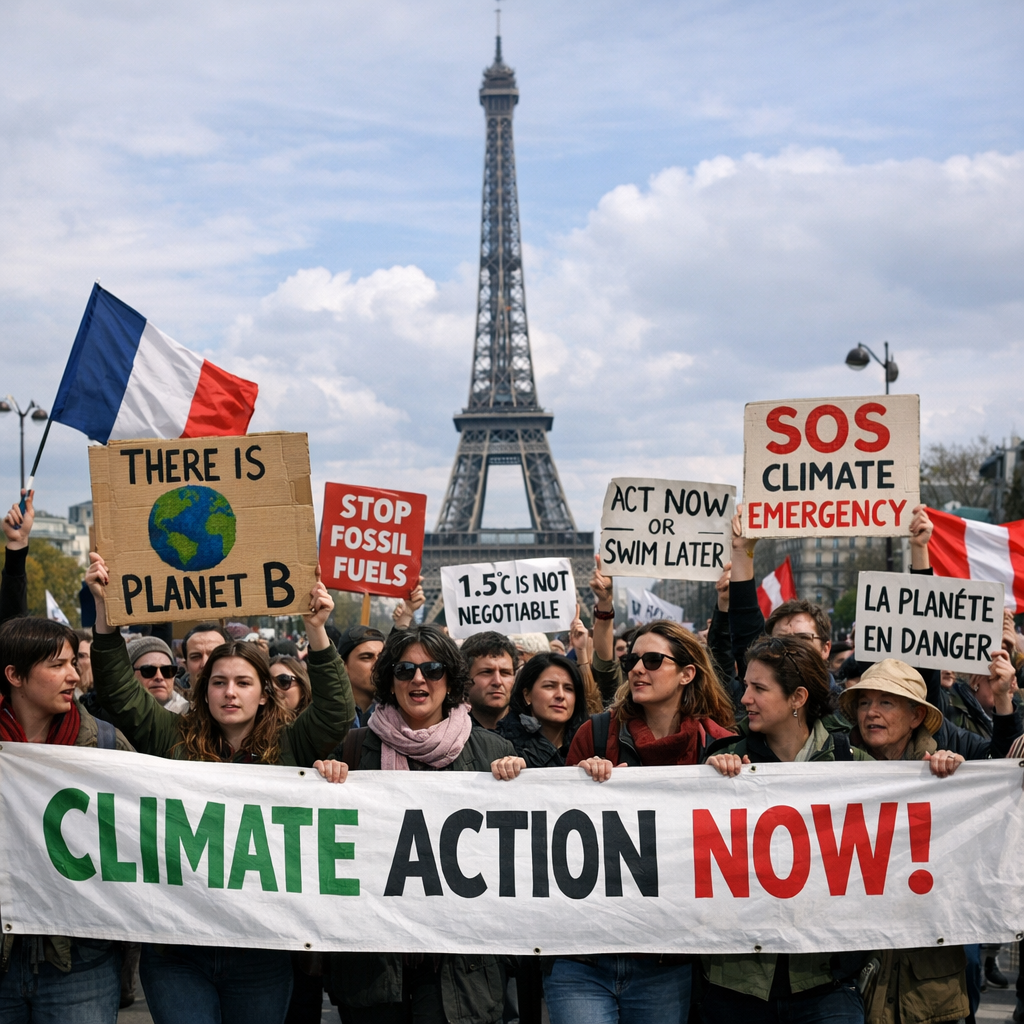
France has long positioned itself as a leader in the global fight against climate change. As the host of the pivotal COP21 conference in 2015, which resulted in the Paris Agreement, the nation set ambitious targets to limit global warming to well below 2°C above pre-industrial levels.
National Commitments and Strategies
To meet its climate objectives, France adopted the National Low-Carbon Strategy (SNBC), aiming for carbon neutrality by 2050. The strategy outlines sector-specific guidelines and sets carbon budgets to monitor progress. However, recent evaluations indicate that while emissions have decreased by 34% since 1990, the pace of reduction has slowed, raising concerns about meeting future targets.
International Financial Contributions
Recognizing the importance of supporting developing nations in their climate efforts, France committed to increasing its public climate finance. Between 2021 and 2025, the country pledged €6 billion annually, with a third dedicated to adaptation measures. In 2022, France exceeded this commitment by providing €7.6 billion, including €2.6 billion for adaptation initiatives.
Challenges and Criticisms
Despite these efforts, France faces criticism for not fully aligning its actions with its commitments. The French High Council on Climate highlighted the urgent need to scale up climate policies, emphasizing that current measures are insufficient to achieve carbon neutrality by 2050. Additionally, recent budget cuts to climate adaptation funds have drawn concern from environmental advocates, especially in the wake of increasing heatwaves and other climate-related events.
Legal Actions and Corporate Accountability
France’s approach to corporate responsibility in climate action has also come under scrutiny. In a landmark case, oil giant TotalEnergies faced a lawsuit for allegedly failing to align its operations with the Paris Agreement targets. The French prosecutor’s office’s intervention in defense of the company sparked debates about the extent of corporate accountability in national climate policies.
Looking Ahead
As global climate challenges intensify, France’s role in international climate initiatives remains crucial. Balancing ambitious commitments with effective implementation will determine the nation’s ability to lead by example and inspire global action against climate change.