

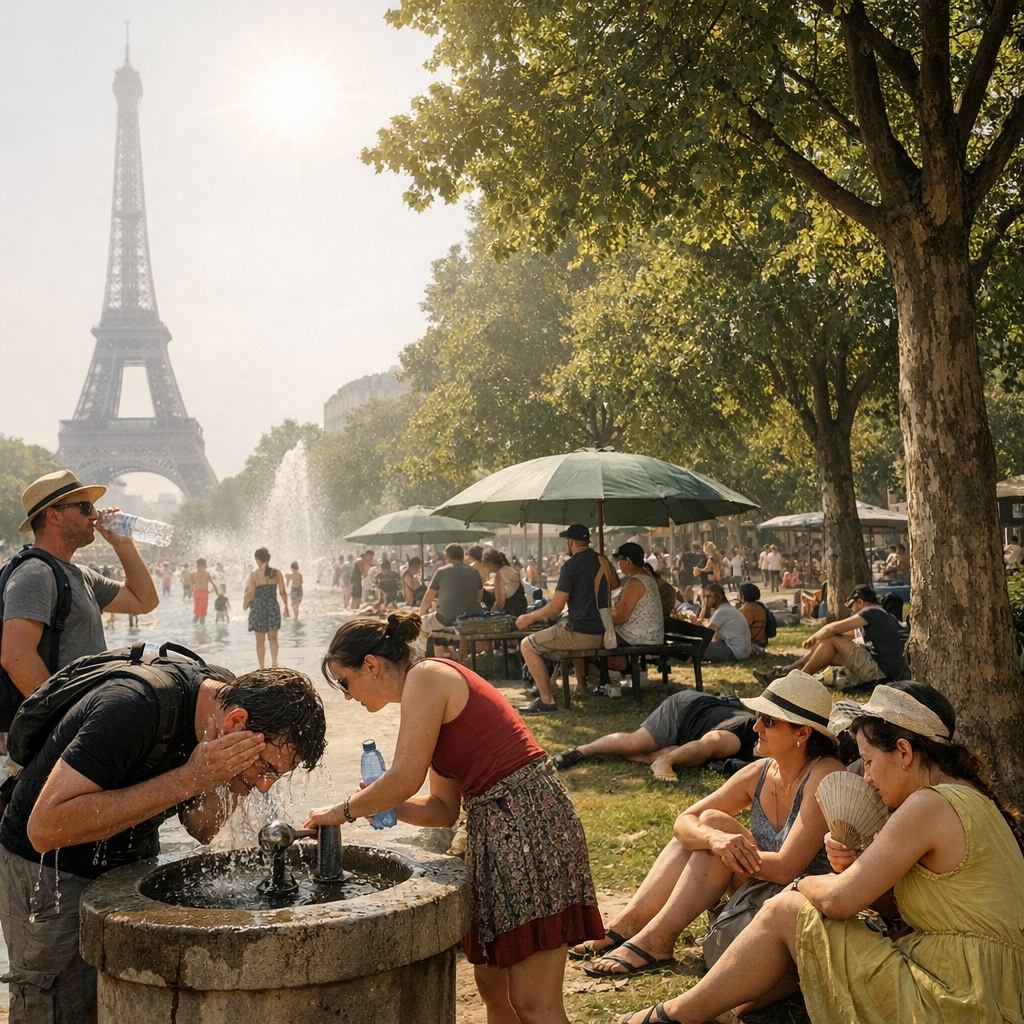
Paris is experiencing significant climate changes, with average temperatures rising by approximately 2.76°C since the late 19th century. This warming trend has led to more frequent and intense heatwaves, posing health risks and straining urban infrastructure.
Urban Heat Island Effect
The city’s dense urban fabric exacerbates the heat through the urban heat island effect, where built-up areas retain more heat than surrounding rural regions. This phenomenon results in temperature differences of up to 2.5°C on average, and during certain conditions, differences can exceed 10°C between Paris and nearby areas like Melun.
Adaptation Strategies
In response, Paris has implemented several adaptation measures:
- Greening Initiatives: Increasing vegetation in urban spaces to provide shade and reduce heat absorption.
- Water Management: Enhancing the presence of water bodies to cool the environment.
- Building Retrofits: Improving insulation and installing cooling systems in public buildings.
These efforts aim to mitigate the adverse effects of climate change and protect vulnerable populations.
Call for Collective Action
Paris Mayor Emmanuel Grégoire emphasizes the need for societal changes, such as adjusting work hours during extreme heat, to adapt effectively. He advocates for a collaborative approach involving government, unions, experts, and civil society to anticipate and prepare for recurring climate events.
As global temperatures continue to rise, Paris’s proactive measures serve as a model for urban adaptation, highlighting the importance of immediate and coordinated action to address climate challenges.