

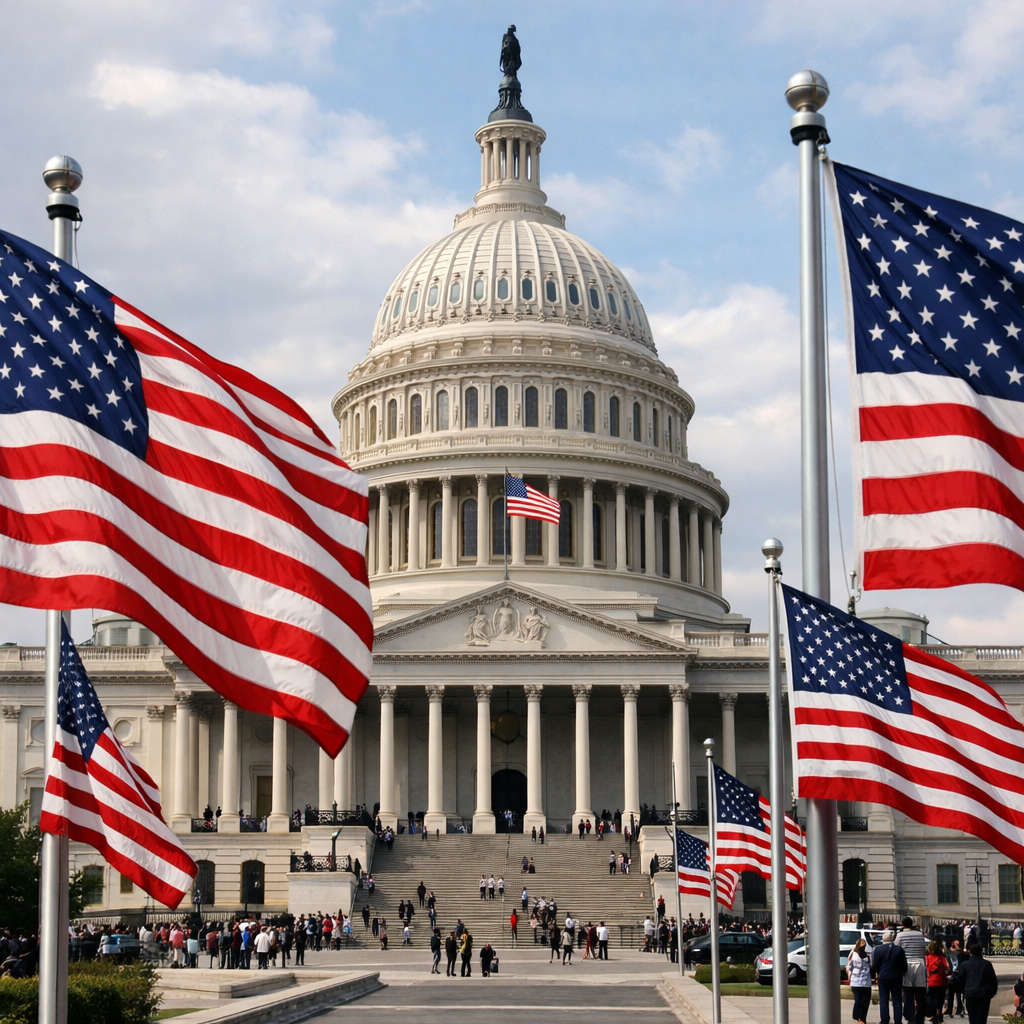
The United States continues to experience significant political developments that have far-reaching implications both domestically and internationally. As observers from Paris, it’s crucial to stay informed about these events to understand their potential impact on global affairs.
Midterm Elections and Congressional Dynamics
The upcoming midterm elections in November 2026 are set to reshape the U.S. Congress. All 435 seats in the House of Representatives and 35 of the 100 Senate seats are up for election. The outcomes will determine the legislative agenda for the remainder of President Donald Trump’s term and could influence U.S. policies on trade, defense, and international relations.
Economic Policies and Global Trade
The U.S. economy is navigating a complex landscape marked by inflation concerns and trade policy shifts. The Federal Reserve’s recent decisions on interest rates aim to balance economic growth with inflation control. Additionally, the administration’s trade policies, including tariffs and negotiations with key partners, continue to affect global markets.
Foreign Policy and International Relations
U.S. foreign policy remains a focal point, with ongoing discussions about military engagements and diplomatic strategies. The administration’s approach to international alliances and conflicts has significant implications for global stability and economic partnerships.
Technological Advancements and Regulatory Challenges
The rapid advancement of artificial intelligence (AI) technologies has prompted debates over regulation and ethical considerations. U.S. policymakers are grappling with how to foster innovation while addressing concerns about privacy, security, and job displacement.
Staying informed about these developments is essential for understanding the evolving U.S. political landscape and its potential impact on international affairs.