

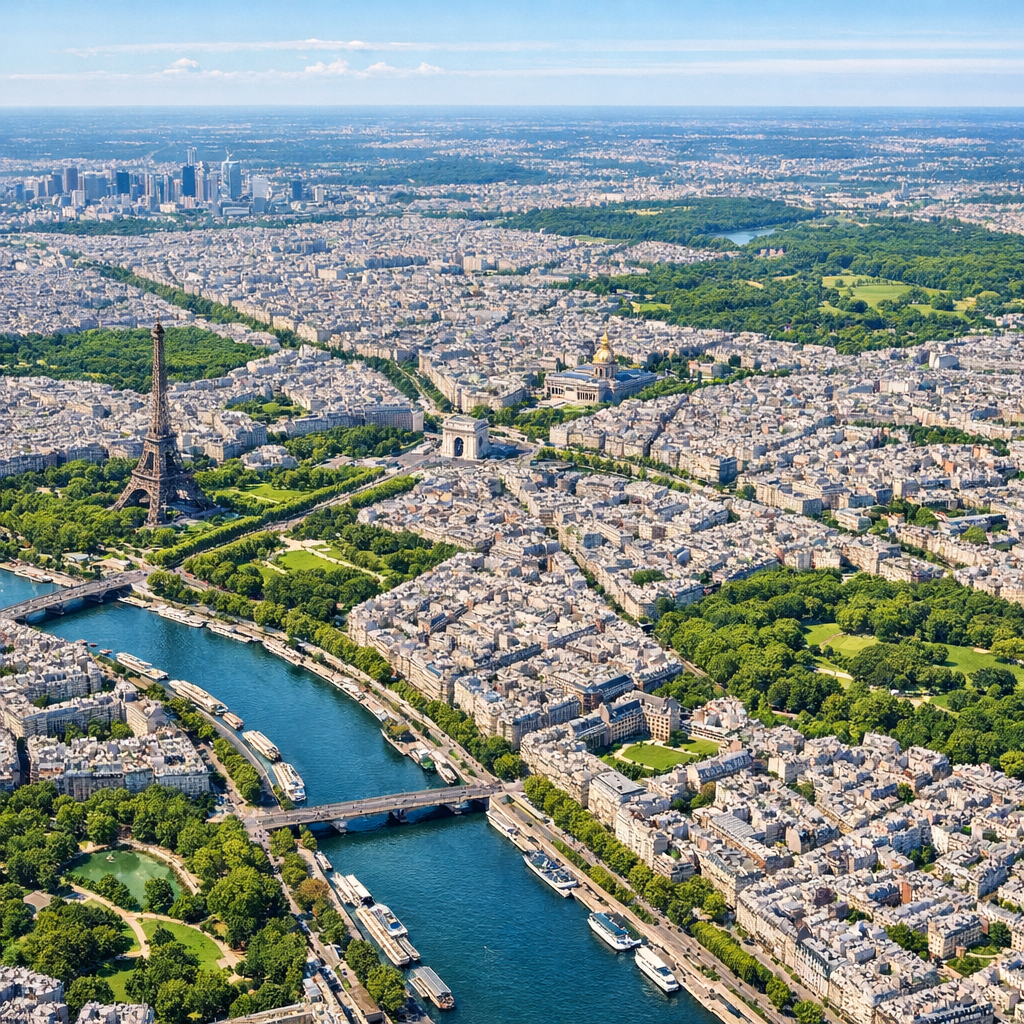
Paris, renowned for its architectural beauty and vibrant urban life, is increasingly grappling with the intensifying effects of the Urban Heat Island (UHI) phenomenon. This effect causes urban areas to experience higher temperatures than their rural surroundings, a situation exacerbated by climate change.
Understanding the Urban Heat Island Effect
The UHI effect arises when urban materials like concrete and asphalt absorb and retain heat, leading to elevated temperatures in city environments. In Paris, this effect is particularly pronounced due to the city’s dense infrastructure and limited green spaces. Studies have shown that during heatwaves, temperatures in Paris can be significantly higher than in surrounding rural areas, sometimes by as much as 10°C.
Impact on Vulnerable Populations
The UHI effect disproportionately affects vulnerable populations, including the elderly, children, and low-income households. These groups often reside in areas with higher UHI intensity and may lack access to cooling resources. For instance, residents living under Paris’s zinc roofs, which cover a significant portion of the city’s buildings, experience extreme indoor temperatures during heatwaves, leading to health risks such as heat exhaustion and dehydration.
Mitigation Efforts and Adaptation Strategies
To combat the UHI effect, Paris has initiated several mitigation strategies. The OASIS program aims to transform schoolyards into climate shelters by introducing vegetation and alternative paving materials to reduce heat absorption. Additionally, the redevelopment of La Villette into an ‘urban climate laboratory’ focuses on creating green spaces and promoting biodiversity to enhance urban cooling.
These efforts underscore the importance of integrating green infrastructure and sustainable urban planning to mitigate the adverse effects of the UHI phenomenon. As climate change continues to influence weather patterns, such initiatives are crucial for enhancing the resilience of urban environments and protecting public health.