

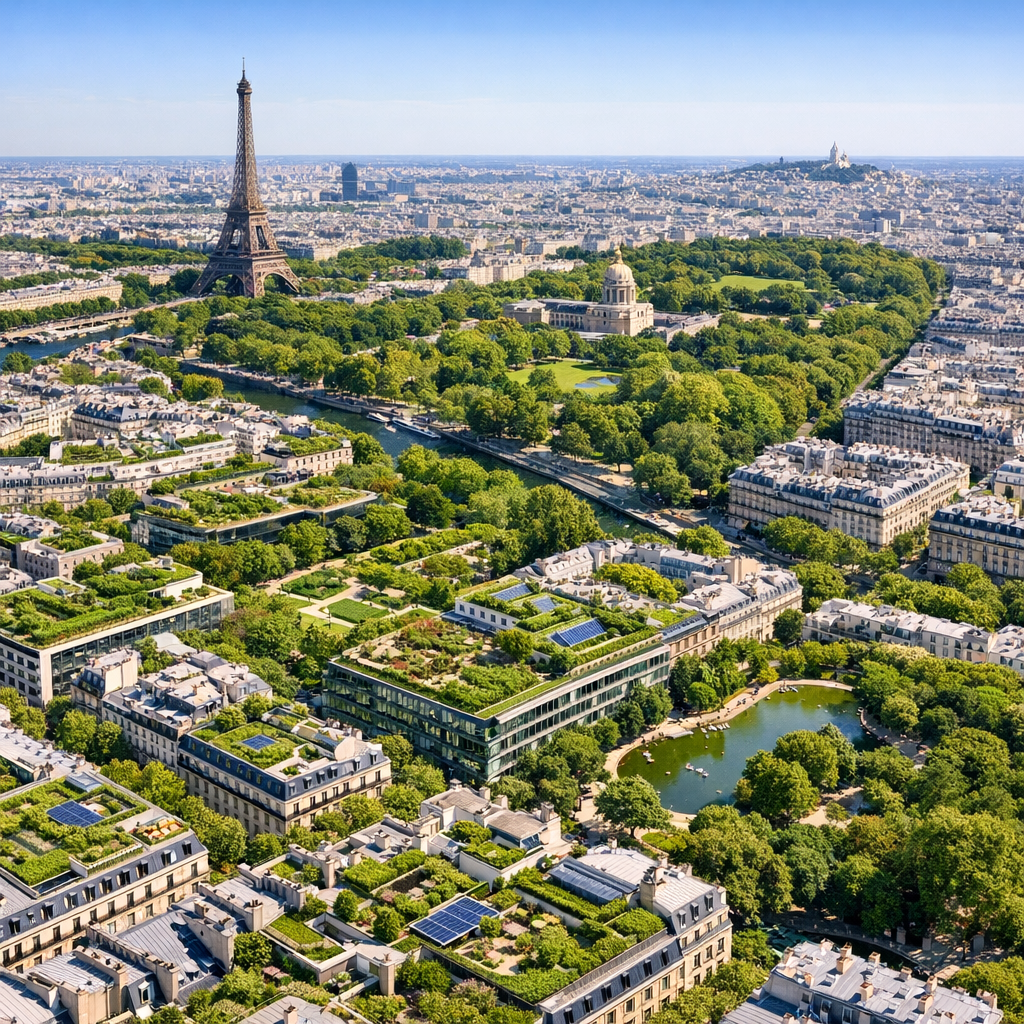
Paris, renowned for its architectural beauty and dense urban fabric, faces a significant challenge: the Urban Heat Island (UHI) effect. This phenomenon results in higher temperatures within the city compared to surrounding rural areas, primarily due to human activities and urban design.
What Causes the Urban Heat Island Effect?
The UHI effect arises from several factors:
- Building Materials: Materials like concrete and asphalt absorb and retain heat during the day, releasing it slowly at night, leading to elevated temperatures.
- Limited Vegetation: Sparse greenery reduces natural cooling through evapotranspiration, exacerbating heat retention.
- Human Activities: Energy consumption from vehicles, air conditioning, and industrial processes generates additional heat.
Impacts on Paris
In Paris, the UHI effect is particularly pronounced. Studies have shown that during heatwaves, temperatures in the city can be significantly higher than in surrounding areas. This intensifies health risks, especially for vulnerable populations such as the elderly and children. Additionally, the UHI effect can worsen air quality and increase energy demand for cooling.
Mitigation Strategies
To combat the UHI effect, Paris has implemented several initiatives:
- Greening Urban Spaces: Programs like the OASIS project aim to transform schoolyards into cooler environments by introducing vegetation and water features.
- Reflective Materials: Using materials with higher reflectivity for pavements and rooftops to reduce heat absorption.
- Urban Planning: Designing buildings and public spaces to enhance airflow and provide shade.
Residents can also contribute by planting trees, creating green roofs, and reducing energy consumption during peak heat periods.
Looking Ahead
As climate change progresses, the frequency and intensity of heatwaves are expected to increase, making the UHI effect a growing concern. Continued research and proactive urban planning are essential to adapt to these changes and ensure the well-being of Paris’s inhabitants.